Have you ever come across a Mammy Doll and wondered what it really is? These dolls hold a unique place in history and culture, but many people don’t know their full story.
If you want to understand what Mammy Dolls are, why they were made, and what they represent today, you’re in the right place. By the end of this article, you’ll see these dolls in a whole new light—and discover why they still matter.
Keep reading to uncover the truth behind Mammy Dolls and why they continue to spark interest and conversation.

Credit: www.reddit.com
Origins Of Mammy Dolls
Mammy dolls are a type of doll that became popular in the United States. They represent a character called “Mammy,” a Black woman who worked as a house servant.
These dolls have a long history and were made in many styles. They often show a smiling, strong woman dressed in a headscarf and apron.
Early Beginnings
The Mammy figure started as a stereotype during the 19th century. She was seen as a caring, loyal servant in white homes.
Dolls based on this character appeared in the late 1800s. They were made to look like the Mammy women from stories and popular culture.
Manufacturing And Popularity
Many Mammy dolls were made from cloth, porcelain, or plastic. Toy companies sold them widely from the early 1900s to the 1950s.
These dolls became popular because they were part of many homes. They were often given as gifts or used as decorations.
Design And Features
Mammy dolls are a type of collectible doll known for their distinct design. They often represent African American women in a traditional style.
Their design and features reflect cultural history and artistic craftsmanship. Many collectors appreciate their unique look and symbolism.
Typical Characteristics
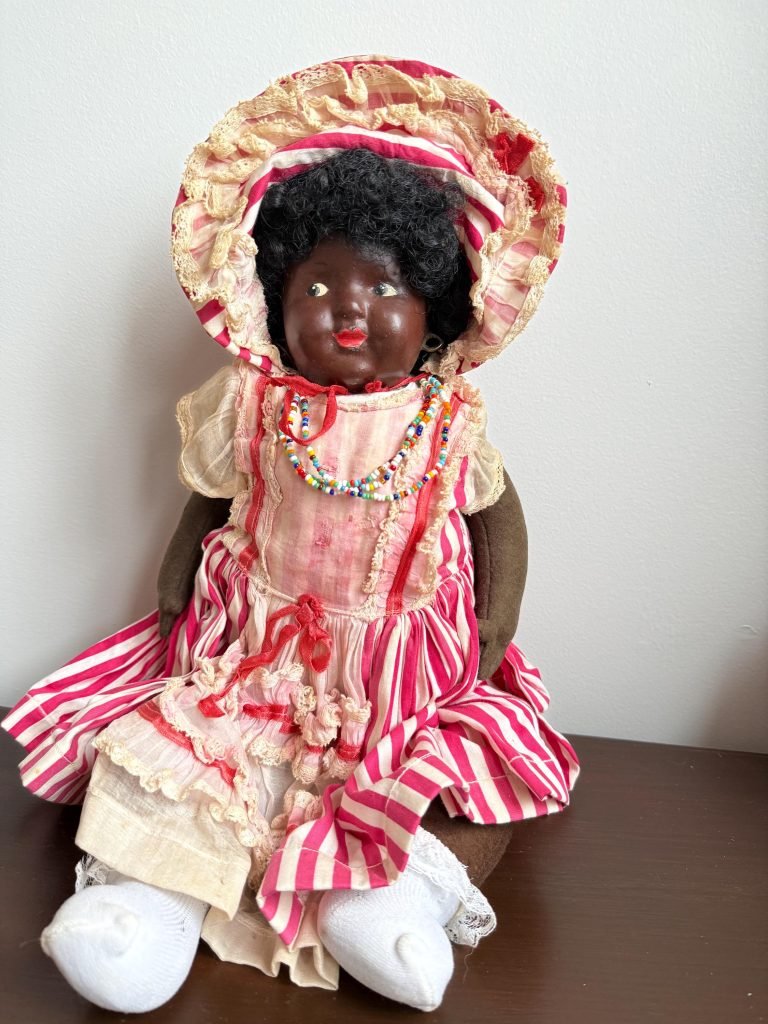
Mammy dolls usually have dark skin tones and exaggerated facial features. Their expressions are often warm and welcoming.
- Curly or coiled hair styled in traditional ways
- Large eyes and broad noses
- Full lips with a smiling mouth
- Wearing colorful headscarves or bandanas
- Clothed in old-fashioned dresses or aprons
Materials And Craftsmanship
These dolls are made from a variety of materials including cloth, porcelain, and plastic. Each material affects the doll’s look and feel.
| Material | Description | Common Use |
| Cloth | Soft fabric, often hand-sewn | Body and clothing |
| Porcelain | Hard, smooth ceramic | Face and hands |
| Plastic | Durable synthetic material | Mass-produced dolls |
| Paint | Used for facial details | Eyes, lips, and cheeks |
Cultural Context
Mammy dolls are figurines that represent a specific cultural image. They stem from old ideas about African American women.
These dolls show how history and culture shaped the view of Black women in the United States. Understanding this helps us see the impact of those images today.
Stereotypes And Representation
The mammy figure is a stereotype of a Black woman who works as a loyal servant. This image shows her as happy, strong, and caring. It ignores real struggles and diversity in Black women’s lives.
- The mammy is often shown with a big smile and headwrap.
- She is usually portrayed as a caretaker for white families.
- This stereotype suggests Black women only exist to serve others.
- It hides the true history of Black women’s experiences.
Role In American History
Mammy dolls became popular in the late 1800s and early 1900s. They were part of stories and products that shaped ideas about race and gender.
| Time Period | Role of Mammy Dolls |
| Late 1800s | Used in minstrel shows and advertisements |
| Early 1900s | Common in household items and toys |
| Mid 1900s | Symbolized Southern nostalgia and segregation |

Credit: medium.com
Impact On Society
Mammy Dolls are figures that show a specific image of Black women. These dolls appeared in the 19th and 20th centuries. They often showed Black women as happy servants or caretakers.
These dolls affected how people saw race and culture. They spread ideas that shaped social views in many ways.
Influence On Racial Perceptions
Mammy Dolls gave a false idea about Black women. They showed them as always loyal and smiling, ignoring real struggles.
This image made it harder for society to see Black women as individuals with their own rights and feelings. It kept unfair ideas alive.
- Reinforced stereotypes of Black women as caretakers only
- Ignored the complexity of Black women’s lives
- Made racial discrimination seem normal
Mammy Dolls In Media And Advertising
Mammy figures often appeared in old movies, ads, and TV shows. They were used to sell products or tell stories.
These images helped spread the mammy stereotype to many people. They made the idea seem funny or harmless, but it was hurtful.
- Used in product packaging to suggest trust and care
- Appeared in cartoons and films as comic relief
- Helped create a market for mammy-themed merchandise
Modern Perspectives
Mammy dolls are old-fashioned dolls that show a black woman as a caretaker. Today, people look at these dolls in new ways. They see them as part of history and also as symbols that need careful thought.
Understanding mammy dolls helps us learn about past ideas and how they affect us now. It is important to talk about their meaning and place in culture.
Criticism And Controversy
Mammy dolls face criticism because they show stereotypes. These dolls often make black women look like happy servants. This image is unfair and hurtful. Many say these dolls keep old, wrong ideas alive.
- They promote racial stereotypes.
- They ignore the true history of black women.
- They can be offensive to many people.
Some argue that mammy dolls should not be used or displayed. Others believe they can teach about racism and history if shown with explanation.
Collecting And Preservation
Collectors keep mammy dolls as part of American history. They want to preserve these dolls to show how people once thought. Museums also collect them to tell important stories.
| Reason for Collecting | Details |
| Historical Value | Shows old social beliefs and culture |
| Educational Use | Teaches about racial stereotypes and history |
| Artistic Interest | Reflects craftsmanship and design of the past |
| Preservation | Protects objects from being lost or damaged |
Collectors and museums must share the true story behind mammy dolls. This helps people understand why these dolls matter and why they can cause pain.
Mammy Dolls Today
Mammy dolls have a long history. They are often seen as a symbol of racial stereotypes. Today, people are re-examining their meaning and value.
Some collectors see them as a part of history. Others view them as offensive. This has led to new discussions about their place in society.
Changing Attitudes
Attitudes towards mammy dolls are changing. People are more aware of their cultural impact. This awareness leads to more thoughtful conversations.
Many museums now choose to display them carefully. They use them to teach about past stereotypes. This helps visitors understand the dolls’ history.
- Increased awareness about racial stereotypes
- Careful display in museums
- Educational focus in exhibitions
Educational Uses
Mammy dolls are used in education to discuss history. They help teach about race and culture. This use can encourage important conversations.
Teachers use them to highlight historical contexts. They are tools to show how society has changed. They also help students learn about past prejudices.
- Classroom discussions on race and culture
- Highlighting historical contexts
- Understanding societal changes

Credit: www.ebay.ca
Frequently Asked Questions
What Are Mammy Dolls Historically?
Mammy Dolls are vintage dolls representing African American women from the 19th and early 20th centuries. They often reflect stereotypical features and roles tied to domestic servitude. These dolls hold cultural and historical significance, showing how racial imagery was portrayed in the past.
Why Are Mammy Dolls Considered Controversial?
Mammy Dolls are controversial because they perpetuate racial stereotypes. They often depict exaggerated features and roles that reinforce negative images of Black women. This makes them sensitive collectibles and symbols of a painful history of racism and discrimination.
How Are Mammy Dolls Made?
Mammy Dolls are typically made from materials like porcelain, cloth, or plastic. They feature dark skin tones, headscarves, and period clothing. The craftsmanship varies from simple handmade dolls to detailed factory-made collectibles.
Are Mammy Dolls Valuable To Collectors?
Yes, Mammy Dolls can be valuable, especially vintage or rare pieces. Collectors seek them for their historical significance and craftsmanship. However, value depends on condition, age, and rarity, alongside the cultural context.
Conclusion
Mammy dolls reflect a complex part of history and culture. They show how people once viewed race and identity. Many find these dolls troubling but important to understand. Collectors and historians study them to learn from the past. Remember, these dolls tell a story, not just a toy.
Knowing their background helps us think about respect and change. This awareness can guide how we treat others today. Understanding mammy dolls means facing history honestly and thoughtfully.