Have you ever wondered what exactly Barbie dolls are made of? It’s more than just plastic—there’s a fascinating mix of materials behind your favorite doll.
Knowing what goes into making Barbie can change how you see her, whether you’re a collector, a parent, or just curious. From the flexible vinyl that shapes her head to the special plastics in her limbs and even the unique fibers in her hair, each part is carefully crafted.
Keep reading, and you’ll discover the surprising chemistry and craftsmanship that bring Barbie to life—and why these materials matter for durability, safety, and even the environment.

Credit: www.compoundchem.com
Barbie Doll Composition
Barbie dolls have fascinated children and collectors for decades. Understanding what these dolls are made of reveals how materials shape their look and feel. The composition of Barbie dolls has evolved from early models to modern versions.
The materials used impact the doll’s flexibility, durability, and safety. Each part of the doll uses specific plastics designed for different purposes. Below is a look at the materials used in early and modern Barbie dolls.
Materials In Early Barbies
The first Barbie dolls mainly used polyvinyl chloride (PVC) plastic. PVC was chosen for its ability to be soft and flexible. To achieve this, plasticizers were added to the PVC. These plasticizers helped the doll’s body and limbs move easily.
Over time, plasticizers would move out of the plastic. This caused the doll to become sticky and sometimes discolored. Early Barbies also had a white, powdery surface due to this effect. Despite these issues, PVC made the dolls durable and attractive.
Modern Barbie Materials
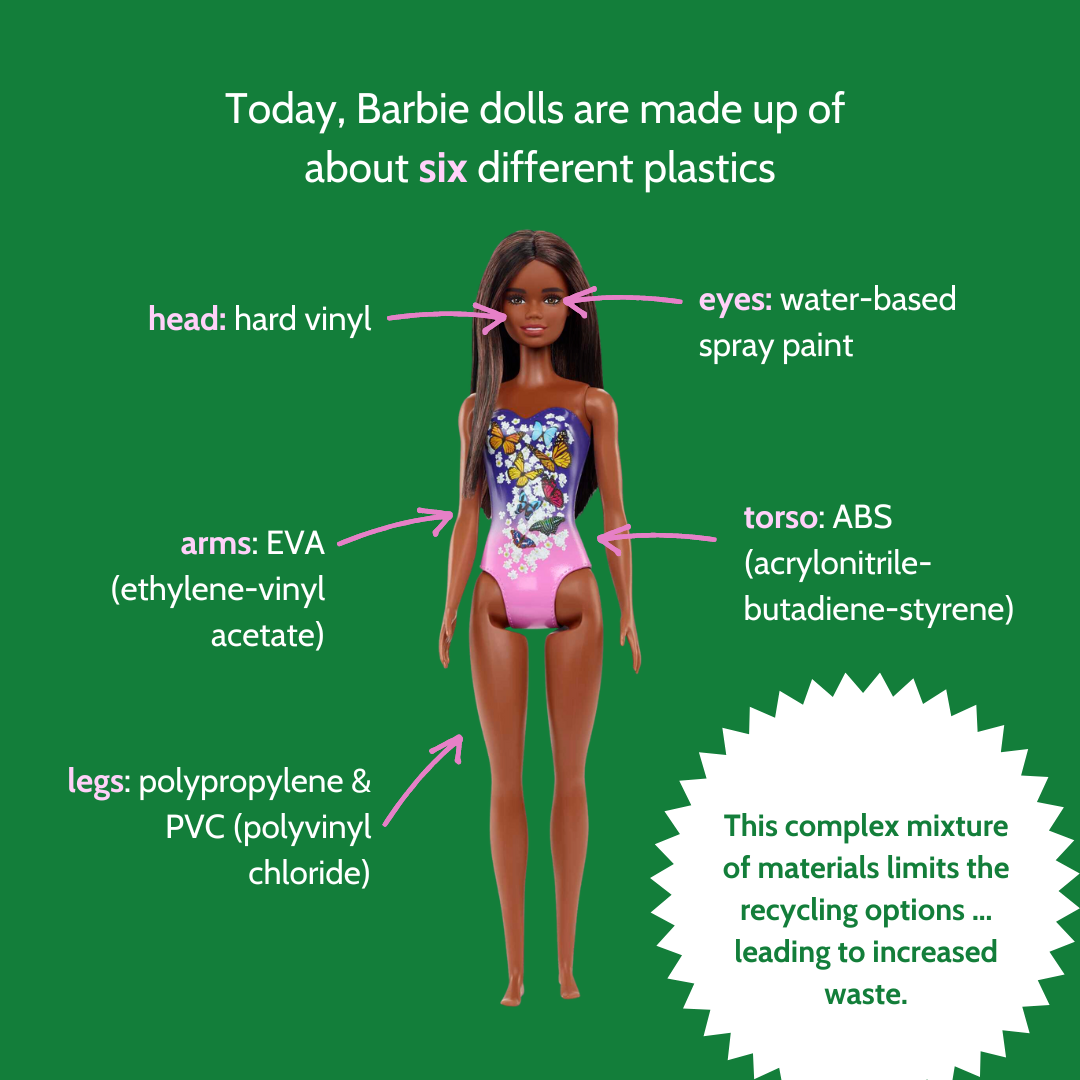
Today, Barbie dolls use a mix of advanced plastics for better quality. The head is made from vinyl, which is soft and easy to shape. The arms use EVA (ethylene-vinyl acetate) for flexibility. The torso is made from ABS plastic, which is strong and tough.
The legs combine polypropylene and PVC, making them durable and safe. These materials ensure the doll can handle play without damage. Modern plastics also reduce the risk of discoloration and stickiness. This makes Barbie dolls last longer and stay beautiful.
Credit: www.plasticreimagined.org
Head Materials
The head of a Barbie doll is carefully crafted to ensure a smooth, lifelike appearance. Manufacturers choose specific materials to balance durability, flexibility, and detail. These materials also affect how the doll feels and holds up over time.
Understanding the materials used in Barbie heads helps explain their unique look and texture. It also shows how the dolls maintain their shape and color despite play and handling.
Vinyl And Pvc Usage
Barbie heads are mainly made from vinyl, a type of plastic that offers softness and strength. Vinyl allows for detailed facial features and a smooth finish. Early Barbie dolls used polyvinyl chloride (PVC) for their heads. PVC is a plastic known for its flexibility and durability. This made the heads sturdy but soft enough to touch. Over time, vinyl became more popular as it is easier to shape and less prone to yellowing.
Both vinyl and PVC help create a realistic skin-like texture. The materials are molded precisely to capture Barbie’s iconic face. The choice between vinyl and PVC depends on the desired flexibility and production methods.
Plasticizers And Flexibility
Plasticizers are chemicals added to vinyl or PVC to make the head softer and more flexible. They keep the plastic from becoming too hard or brittle. This flexibility helps the head resist cracking during play. Without plasticizers, the head would feel stiff and could break easily.
Plasticizers can move out of the plastic over time. This movement may cause the doll’s surface to become sticky or discolored. Manufacturers work to improve plasticizer formulas to reduce these effects. The right balance keeps the doll both durable and safe for children.
Body Components
The body of a Barbie doll consists of several parts. Each part uses specific materials. These materials give Barbie her shape and flexibility.
Understanding the body components helps explain how Barbie feels and moves. The main parts are the torso, arms, and legs. Different plastics are chosen for each part.
Torso Polymers
The torso is made from ABS plastic, a strong and rigid polymer. ABS stands for acrylonitrile-butadiene-styrene. This plastic keeps the torso firm and durable.
ABS resists impact and holds Barbie’s shape well. It allows the torso to support the doll’s weight. The material is also easy to mold with fine details.
Arm And Leg Plastics
Arms use EVA plastic, which stands for ethylene-vinyl acetate. EVA is soft and flexible. This material lets Barbie’s arms bend without breaking.
Legs are made from polypropylene and PVC plastics. These materials balance flexibility and strength. Early Barbies used a softer PVC to keep legs smooth and durable.
These plastics also resist wear and tear. They help Barbie keep her pose and last through playtime.
Hair Materials
Barbie dolls are famous for their beautiful hair, which plays a big role in their charm. The hair on Barbie dolls is made from special materials designed to look realistic and feel soft. These materials help Barbie’s hair hold styles and last through playtime. Understanding the types of hair used helps explain why Barbie’s hair looks so good.
Common Hair Polymers
Most Barbie doll hair uses synthetic polymers. Nylon is a popular choice because it looks shiny and feels smooth. It also resists tangling and holds curls well. Another common polymer is saran, known for its silky texture and durability. Saran hair is soft and less likely to frizz. These polymers can be colored in many shades to match different Barbie styles.
Polyester is also used sometimes. It is strong and can keep its shape after washing. These synthetic fibers are lightweight and safe for children to use. The manufacturing process melts the polymers and forms thin strands to mimic real hair.
Specialty Hair Types
Some Barbie dolls feature specialty hair materials for unique looks. For example, some dolls have holographic or glittery hair made with added reflective fibers. These add sparkle and shine under light. Other specialty hairs include textured or curly fibers, created by using different polymer blends or heat treatments.
Mattel also introduced dolls with rooted hair made from recycled plastics. This eco-friendly option helps reduce waste while keeping the hair soft and manageable. Specialty hair types give Barbie more variety and style options for collectors and kids alike.
Special Edition Barbies
Special Edition Barbies stand apart from regular dolls. They are made with unique materials and crafted for collectors. These dolls often feature higher quality and different textures. The focus is on durability and a premium feel. Their construction reflects attention to detail and innovation in materials.
Silkstone Dolls
Silkstone Barbies use a special type of plastic. This plastic is denser and heavier than regular Barbie material. It feels smooth, like porcelain. The material allows for more detailed sculpting. These dolls have a matte finish, giving them a classic look. Silkstone is strong but delicate, made for display not rough play. Collectors prize these dolls for their elegance and durability.
Recycled Plastic Models
Mattel now produces some Barbies from recycled plastic. This helps reduce waste and supports sustainability. The recycled materials come mainly from ocean-bound plastics. These Barbies keep the same quality as new plastic dolls. Using recycled plastic lowers the environmental impact. It shows Mattel’s commitment to eco-friendly toys. These dolls appeal to buyers who care about the planet.
Material Changes Over Time
The materials used to make Barbie dolls have changed significantly over the years. These changes reflect advances in technology and growing concerns for safety and the environment. Early Barbie dolls were made with simple plastics. Today, Mattel uses more complex and safer materials. This evolution shows how the toy industry adapts to new challenges and demands.
Manufacturing Advances
Early Barbie dolls were made with polyvinyl chloride (PVC). This plastic was flexible but had some drawbacks. Plasticizers were added to make PVC softer. Over time, these plasticizers caused the doll to become sticky and discolored.
New materials replaced PVC to improve durability and safety. Modern Barbies use a mix of vinyl for heads and acrylonitrile butadiene styrene (ABS) for bodies. These materials are stronger and do not degrade easily. Manufacturing processes also became more precise, allowing better quality and detail.
Environmental Regulations
Environmental rules have shaped the materials used in Barbie dolls. Some early plastics contained harmful chemicals. These chemicals are now restricted or banned in toys. Mattel switched to safer plastics to meet global safety standards.
More recently, Mattel introduced recycled plastics in Barbie production. This change reduces waste and the use of new raw materials. The company works to make dolls more eco-friendly while keeping high quality. These efforts reflect growing awareness of environmental impact in toy making.
Plastic Stability Issues
Barbie dolls are mostly made of plastic materials. These plastics sometimes face stability problems. These issues affect the doll’s look and feel over time.
Plastic stability problems can cause changes in texture and color. Understanding these problems helps explain why some old Barbies look different today.
Plasticizer Migration
Plasticizers are chemicals added to make plastic softer. In Barbie dolls, they keep the vinyl flexible. Over time, these plasticizers slowly move to the doll’s surface. This movement is called plasticizer migration.
When plasticizers migrate, they leave a sticky layer on the doll. This stickiness can attract dust and dirt. It also makes the doll less pleasant to touch and play with.
Discoloration And Stickiness
Plasticizer migration often causes discoloration. The doll’s surface may turn white or yellow. This color change can make the doll look old or damaged.
Sticky surfaces happen because plasticizers rise to the outside. This stickiness can make hair and clothes stick to the doll. It lowers the doll’s overall quality and appearance.

Credit: cosmosmagazine.com
Frequently Asked Questions
What Materials Are Used To Make Barbie Dolls?
Barbie dolls use various plastics: vinyl (PVC) for the head, EVA for arms, ABS for the torso, and polypropylene or PVC for legs. Hair is typically made from nylon or polypropylene. Early Barbies mainly used flexible PVC with plasticizers, while modern dolls use safer, advanced polymers.
What Was The Original Barbie Made Of?
The original Barbie doll was made primarily of polyvinyl chloride (PVC) plastic. Plasticizers made it flexible but caused discoloration and stickiness over time.
What Is Barbie Head Made Of?
Barbie heads are made from a hard vinyl compound called polyvinyl chloride (PVC). This material includes plasticizers to adjust flexibility. Over time, the formula has evolved for durability and safety, but modern Barbie heads still primarily use PVC or vinyl compounds.
How Much Plastic Is In A Barbie?
A Barbie doll contains various plastics: PVC vinyl for the head, ABS for the torso, EVA for arms, and polypropylene for legs.
Conclusion
Barbie dolls are made from different plastics like vinyl, ABS, and PVC. Each part uses a special material to give the right shape and feel. Over time, Mattel improved these materials to be safer and more durable. Knowing what makes Barbie helps us appreciate her design and care for her better.
Barbie’s plastic story shows how toys can change with science and safety. It’s a simple look at a classic doll’s hidden details.