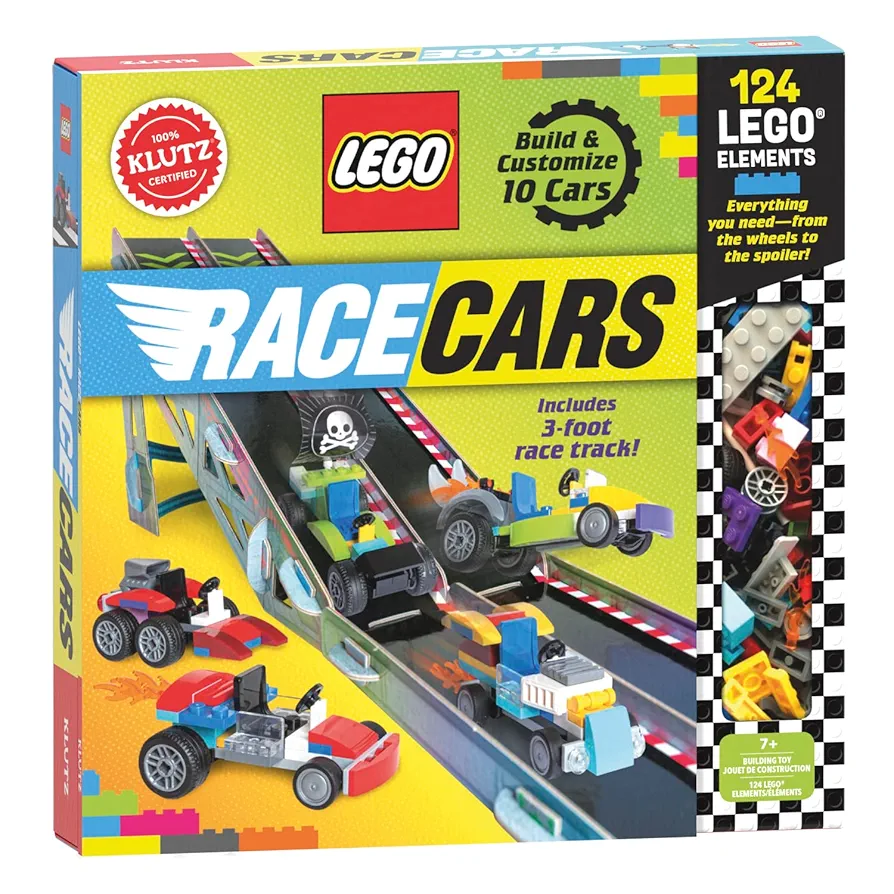
Have you ever wondered if Lego is more than just a fun toy? What if the bricks in your hands could actually boost your skills in science, technology, engineering, and math?
Imagine a toy that not only sparks your creativity but also sharpens your problem-solving abilities. If you want to know how Lego can help you or your child grow smarter and more capable, keep reading. This article will show you why Lego is more than play—it’s a powerful STEM tool waiting for you to discover.
Credit: brickset.com
Lego And Stem Connection
Lego has long been associated with creativity and imagination. But did you know it has a strong connection to STEM education? STEM, which stands for Science, Technology, Engineering, and Mathematics, is essential for developing critical thinking and problem-solving skills. Lego toys are perfect for nurturing these skills in children. They encourage exploration, experimentation, and innovation. Let’s dive into how Lego supports STEM learning.
Core Stem Skills In Lego Play
Building with Lego helps kids grasp basic engineering concepts. As they construct, they understand the importance of balance and stability. Using different pieces, they explore structural design and architectural principles. Lego also introduces mathematical skills. Children learn about symmetry and spatial awareness while arranging blocks. These activities promote logical thinking, laying a foundation for future STEM learning.
Building Problem-solving Abilities
Lego challenges kids to solve problems creatively. They start with a vision and work towards a finished model. If a structure falls, they reconsider their approach. They learn resilience and perseverance. This hands-on experience teaches them to think critically. It helps them identify problems and explore multiple solutions. Problem-solving becomes a fun and engaging process.
Encouraging Logical Thinking
Logical thinking is crucial in STEM education. Lego helps children develop this skill. As they build, they plan and sequence their actions. They analyze the consequences of each decision. This structured approach nurtures logical reasoning. Kids learn to predict outcomes and refine their strategies. Lego play encourages systematic thinking, essential for STEM success.
Creativity Through Building
Creativity through building is a core reason why Lego stands out as more than just a toy. It encourages you to think beyond the instructions and invent your own designs. This process sharpens problem-solving skills and pushes you to bring your ideas to life with your hands.
Designing Unique Models
With Lego, the possibilities are endless. You can start with a basic set and transform it into something totally new. It’s about experimenting with shapes and colors to create models that no one else has built.
Try mixing different sets to see what fresh designs you can come up with. Have you ever built something that surprised even you? That’s the magic of designing unique models—it challenges your imagination and technical skills simultaneously.
Combining Art With Engineering
Lego allows you to blend creativity with logical thinking. As you build, you learn how structures hold together and how to make them stable. This hands-on experience teaches principles of engineering while letting your artistic side shine.
Think about the last time you built a Lego creation that looked amazing but also stood strong. You practiced art and science at the same time, without even realizing it. How can you use this balance to improve your next project?
Storytelling With Lego Creations
Building with Lego isn’t just about assembling bricks; it’s about telling a story. Each creation can represent a scene, a character, or an idea you want to share. This makes your building experience more meaningful and personal.
When you create a Lego model, ask yourself what story it tells. Does it capture an adventure, a dream, or a memory? Sharing your story through Lego can make your work more engaging and inspire others to think creatively too.
Educational Benefits
Lego is more than just a toy. It offers many educational benefits that support STEM learning. Kids develop important skills while playing with Lego bricks. These skills prepare them for future science, technology, engineering, and math challenges.
Enhancing Spatial Awareness
Lego helps children understand space and shapes. Building models improves their ability to see how parts fit together. This skill is important in subjects like math and engineering. Kids learn to visualize objects in three dimensions. They also gain a better sense of distance and position.
Developing Fine Motor Skills
Handling small Lego pieces strengthens hand muscles. Children improve their finger control and coordination. These fine motor skills are useful for writing and other daily tasks. The precise movements needed to click pieces together help with focus and patience. Repeated practice builds dexterity over time.
Promoting Collaborative Learning
Lego encourages teamwork and communication. Kids often work together to create projects. Sharing ideas and solving problems boosts social skills. Collaboration also teaches patience and respect for others’ opinions. Group play with Lego prepares children for real-life teamwork situations.

Credit: www.chicagotribune.com
Lego In Formal Education
Lego has found a solid place in formal education, going beyond just a fun toy to become a valuable learning tool. Many schools now use Lego sets to help students grasp complex concepts in science, technology, engineering, and math (STEM). This hands-on approach encourages creativity while building critical thinking skills.
Classroom Integration Examples
Teachers use Lego bricks in various subjects to make lessons more interactive. In math, students build shapes to understand geometry better. Science classes often use Lego models to demonstrate physical principles like gravity and force.
One teacher shared how her students designed simple machines with Lego, which helped them understand mechanical advantage without getting overwhelmed by textbook theory. Could you imagine your students building their own experiments to learn key ideas?
Stem Curriculum Support
Lego supports STEM learning by aligning with many educational standards. It helps students practice problem-solving, spatial reasoning, and collaboration. These skills are crucial in STEM fields and beyond.
Schools often use themed Lego kits that focus on engineering challenges or scientific exploration. This approach makes abstract ideas tangible and encourages students to experiment, fail, and try again.
Lego Robotics And Coding
Lego Robotics kits, like Mindstorms and Spike Prime, add a programming layer to the building experience. Students learn to code while constructing robots that can move and respond to their environment.
This combination of building and coding introduces students to real-world technology skills. It’s a powerful way to engage young minds in STEM careers early on. How might coding your own robot change your perspective on technology?
Lego Sets That Inspire Stem
Lego sets offer more than just fun building experiences—they can be powerful tools to spark interest in STEM subjects. The variety of sets available means you can find one that challenges your problem-solving skills, encourages creativity, and teaches engineering concepts. Here’s a look at some Lego lines that truly inspire STEM learning.
Technic And Mindstorms Series
The Lego Technic series brings mechanical engineering to life with gears, axles, and motors. You get to build models that move, turn, and perform complex functions, making abstract principles tangible. Mindstorms takes it a step further by combining robotics with programming, letting you control your creations through code.
Have you ever tried programming a robot you built yourself? This hands-on approach deepens understanding and keeps you engaged much longer than passive learning.
Education-focused Kits
Lego Education kits are designed specifically for classroom and home learning. They include guided lesson plans and activities that focus on science, technology, engineering, and math concepts. These sets encourage teamwork and critical thinking, often involving experiments and real-world problem solving.
These kits can be a great resource if you want structured learning while still having fun. What STEM concepts would you like to explore through building?
Customizable And Open-ended Sets
Standard Lego bricks may seem simple, but their potential is huge. Open-ended sets let you build anything you imagine, promoting creativity and innovation. This freedom encourages you to experiment with designs, test hypotheses, and learn from trial and error.
How do you think open-ended play compares to step-by-step instructions in developing STEM skills? Trying your own designs often leads to unexpected discoveries and a deeper grasp of scientific principles.

Credit: www.mercadolibre.com.mx
Parental And Educator Roles
Parents and educators play a crucial role in shaping how children interact with Lego as a STEM toy. Their involvement can transform simple building blocks into powerful learning tools. Understanding how to guide without taking over is key to fostering creativity and critical thinking.
Guiding Exploration And Experimentation
You don’t need to give all the answers for learning to happen. Instead, ask questions that spark curiosity, like “What do you think will happen if you connect these pieces this way?”
Encourage kids to try different designs and test their ideas. This hands-on experimentation helps them understand cause and effect naturally.
Sharing your own process of trial and error can make kids feel safe to fail and try again. For example, showing how you once built a model that didn’t work can inspire persistence.
Encouraging Critical Thinking
Use Lego challenges to push kids to think deeper. Ask them to explain their building choices or solve problems like “How can you make this structure stronger?”
Encourage them to compare different solutions and decide which one works best. This practice builds reasoning skills that extend beyond just playtime.
When you highlight the “why” behind their designs, children learn to connect their actions with outcomes. This connection is fundamental to STEM learning.
Balancing Structure And Freedom
Too much direction can kill creativity, but too little can lead to frustration. Finding the right balance is essential.
- Set simple goals or themes to focus their play, like building a bridge or a vehicle.
- Allow them freedom to interpret those goals their way.
- Step in only when they ask for help or get stuck.
Think about your own experiences with Lego or other toys. How did having some guidance but also room to explore affect your learning? Your approach can help children develop both confidence and independence.
Frequently Asked Questions
Is Lego Considered A Stem Toy?
Yes, Lego is a STEM toy. It promotes science, technology, engineering, and math skills through hands-on building and problem-solving activities.
How Does Lego Support Stem Learning?
Lego encourages creativity, critical thinking, and spatial reasoning. It helps children understand engineering concepts and improves fine motor skills.
Can Lego Improve Children’s Problem-solving Skills?
Absolutely. Lego challenges kids to plan, build, and troubleshoot models, which enhances their analytical and problem-solving abilities.
What Age Group Benefits Most From Lego Stem Toys?
Lego benefits a wide age range, from toddlers with Duplo sets to teens with advanced robotics kits, supporting progressive STEM learning.
Conclusion
Lego builds creativity and problem-solving skills in kids. It teaches basic science, technology, engineering, and math ideas. Kids learn by doing, which helps them understand concepts better. Playing with Lego encourages hands-on learning and critical thinking. It also improves focus and patience while having fun.
So, Lego is more than just a toy. It supports STEM learning in simple and playful ways. This makes it a great tool for young learners to explore and grow.