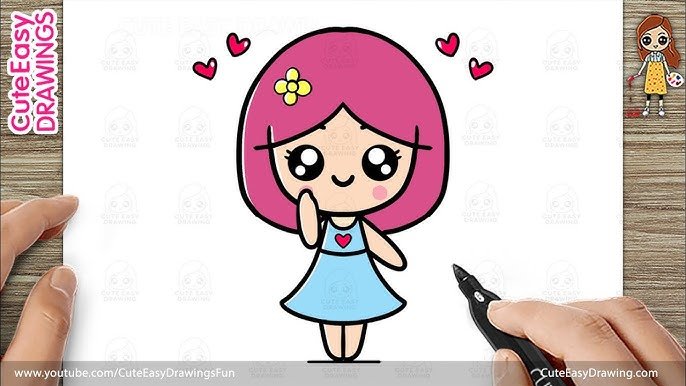
Have you ever wanted to create your own beautiful dolls on paper but didn’t know where to start? Drawing dolls can seem tricky, but with the right steps, you can bring your ideas to life easily.
This guide will show you how to draw dolls in a simple and fun way, even if you’ve never picked up a pencil before. By the end, you’ll have the confidence to create charming doll sketches that express your unique style.
Ready to unlock your creativity and surprise yourself? Let’s dive in!

Credit: www.youtube.com
Materials Needed
Drawing dolls is fun and requires some basic materials. Having the right tools makes your work easier.
Gather your supplies before you start. This helps you stay focused and enjoy the process.
Essential Drawing Tools
You need pencils, erasers, and sharpeners to draw dolls. Different pencils help create light or dark lines.
- Graphite pencils (HB, 2B, 4B)
- Kneaded eraser for gentle corrections
- Standard eraser for clean lines
- Sharpener to keep pencils fine
- Fine-tip black pen for outlining
Choosing The Right Paper
Paper affects how your drawing looks and feels. Choose smooth paper for clean lines and rough paper for texture.
| Paper Type | Best For | Weight |
| Smooth Bristol | Fine lines and details | 100-150 lb |
| Textured Drawing Paper | Shading and texture | 80-100 lb |
| Sketch Paper | Practice and rough sketches | 50-70 lb |
Optional Accessories
Extra tools can improve your drawing experience. These are not needed but can help with details and colors.
- Blending stumps for smooth shading
- Colored pencils for adding color
- Ruler for straight lines
- Lightbox for tracing
- Fixative spray to protect finished art
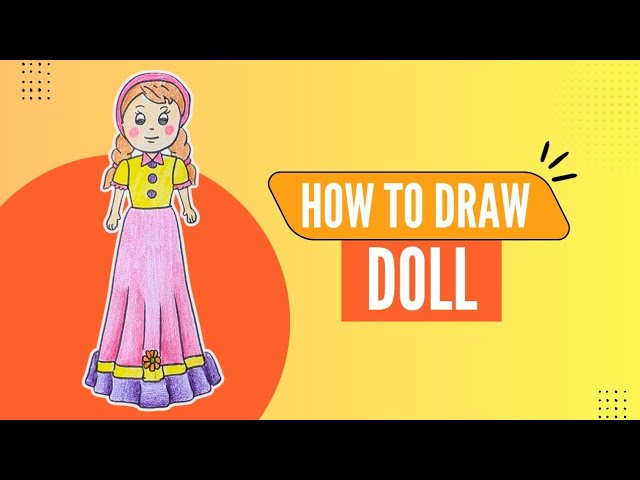
Credit: www.youtube.com
Basic Doll Proportions
Drawing dolls requires understanding the basic proportions. These proportions help make the doll look balanced and natural.
Focus on the size of the head, length of limbs, and face placement. These parts create a strong foundation for your drawing.
Head To Body Ratio
The head to body ratio shows how many heads fit into the full body height. This ratio helps keep the doll’s size correct.
A typical doll uses a ratio of 1:6 to 1:8. This means the doll’s height is six to eight times the size of the head.
- Child dolls: about 1:6 ratio
- Adult dolls: about 1:7 to 1:8 ratio
- Stylized dolls: can vary but keep balance
Limb Length And Placement
Limbs should be the right length and placed well on the body. This makes the doll look natural and flexible.
Arms usually reach mid-thigh when relaxed. Legs make up about half of the doll’s total height.
- Shoulders align with the top of the arms
- Elbows line up near the waist
- Knees fall near the middle of the legs
Facial Feature Guidelines
Place facial features evenly to keep the face balanced. Use simple rules to draw eyes, nose, and mouth.
Divide the face into equal parts from top to bottom. This helps position each feature correctly.
- Eyes sit halfway down the head
- Nose is placed halfway between eyes and chin
- Mouth lies about one-third below the nose
Sketching The Doll Outline
Drawing a doll starts with a simple outline. This helps you plan the shape and size.
Focus on basic shapes first. This makes the drawing easier to adjust later.
Drawing The Head Shape
Begin by drawing a circle for the doll’s head. Keep it light so you can erase later.
Add a slight curve at the bottom for the chin. This gives the head a natural shape.
- Draw a circle for the skull
- Add a small curve for the chin
- Keep lines light and simple
Adding The Body Framework
Sketch a vertical line below the head. This will guide the doll’s spine and posture.
Draw simple shapes like ovals or rectangles for the torso and hips. These shapes show the body’s size.
- Draw a vertical center line
- Use an oval for the chest area
- Sketch a rectangle or oval for the hips
- Keep shapes simple and connected
Positioning The Limbs
Draw lines extending from the body framework to place the arms and legs. These lines show limb positions.
Add small circles for joints like shoulders, elbows, knees, and wrists. This helps with proportion and movement.
- Draw lines for arms and legs
- Place circles at joints
- Check that limbs are balanced
- Adjust lengths to fit the doll’s style
Detailing Facial Features
Drawing dolls with detailed faces makes them look more lively and real. Focus on small parts like eyes and hair to add character.
Use soft lines and gentle shading for a natural look. Keep your strokes light to fix mistakes easily.
Eyes And Eyebrows
Start with the eyes as they show emotion. Draw the shape carefully, usually almond or round. Add pupils and reflections to give life.
Eyebrows frame the eyes and change expressions. Use short strokes to draw fine hairs. Shape them to match the doll’s mood.
- Draw eye shape lightly first
- Add pupils and small white spots for shine
- Use soft lines for eyebrows
- Change eyebrow shape for different looks
Nose And Mouth
Keep the nose simple with soft shading. Draw small nostrils and shadows to show depth. Avoid harsh lines.
The mouth shows the doll’s expression. Draw lips with gentle curves. Add slight shading to show fullness and shape.
- Use light shading for nose sides
- Draw nostrils softly
- Shape lips with smooth curves
- Add shadows under the lower lip
Hair Styles And Textures
Hair adds personality to your doll. Use flowing lines for straight hair and short strokes for curly hair. Vary line thickness for texture.
Divide hair into sections to make drawing easier. Add shadows to show volume. Avoid drawing every strand to keep it natural.
- Start with the hair outline
- Use different lines for texture
- Draw hair parts or waves
- Shade under hair for depth
Clothing And Accessories
Drawing dolls is fun and creative. Clothing and accessories bring your doll to life. They show style and personality.
Focus on details like outfits, textures, and props. These elements make your doll unique and interesting.
Designing Outfits
Start with the shape of the clothes. Think about the doll’s style. You can draw casual, formal, or fantasy outfits.
- Sketch basic shapes like shirts, skirts, or pants.
- Add details such as buttons, collars, and seams.
- Use layers to show how clothes fit on the doll’s body.
- Consider the fabric’s flow and how it moves.
Adding Patterns And Textures
Patterns and textures make clothes look real. They add depth and style to your drawing. Use lines, dots, and shapes to create patterns.
| Pattern Type | Description |
| Stripes | Lines that can be horizontal, vertical, or diagonal |
| Polka Dots | Small, round dots scattered on fabric |
| Checks | Squares or rectangles in a grid pattern |
| Floral | Flower shapes and natural designs |
| Texture | Rough or smooth details showing fabric type |
Incorporating Props
Props add life and story to your doll. They show what the doll likes or where it goes. Draw items like bags, hats, or toys.
Here are some ideas for props:
- Handbags or backpacks
- Hats, scarves, or glasses
- Books, pets, or musical instruments
- Umbrellas or balloons
Shading And Coloring Techniques
Learning to shade and color can make your doll drawings look more realistic. This guide will help you understand shading and coloring techniques.
We will cover the basics of light and shadow, blending colors, and using highlights to create depth in your drawings.
Light And Shadow Basics
Light and shadow give your dolls dimension. Understanding where the light source is can help you decide where to place shadows.
- Identify the light source in your drawing.
- Shade the opposite side for realistic depth.
- Use softer shadows for a more gentle look.
Blending Colors Smoothly
Blending colors helps in creating smooth transitions. Use soft pencils or pastels to achieve a natural blend.
| Tool | Effect |
| Soft Pencil | Gentle blend |
| Pastel | Rich color |
| Blender Tool | Seamless mix |
Using Highlights For Depth
Highlights add life to your drawings. Placing them correctly can make your doll’s features pop.
Adding Personality And Expression
Drawing dolls can be more exciting when you add personality and expression. This makes your artwork unique and engaging. Explore different ways to make your doll drawings come alive.
In this guide, we’ll look at how poses, gestures, facial expressions, and character traits bring personality to your dolls.
Poses And Gestures
Poses and gestures tell a story about your doll. They show what your doll is doing or feeling. Try different poses to express various actions and emotions.

Use images as references for different poses.
Facial Expressions
Facial expressions are important for showing feelings. A smile, frown, or raised eyebrow can change the mood of your doll. Practice drawing different emotions to enhance your skills.
- Happy: Wide eyes and a big smile.
- Sad: Downturned mouth and droopy eyes.
- Surprised: Open mouth and raised eyebrows.
Character Traits Through Details
Details like clothing, accessories, and hairstyles add character traits. These small elements show who your doll is or what they like.
| Detail | Trait |
| Glasses | Intelligent |
| Hat | Adventurous |
| Scarf | Fashionable |
Common Mistakes To Avoid
Drawing dolls can be fun but tricky. Many beginners make simple errors that ruin their work. Avoiding these mistakes helps create better, more lifelike dolls.
This guide shows common problems and how to fix them. Focus on proportion, details, and light to improve your drawings.
Proportion Errors
Dolls need correct body parts size to look right. Proportion errors make dolls look strange or unnatural. Pay close attention to the head, arms, and legs sizes.
- Do not make the head too big or too small.
- Keep arms and legs balanced and in scale.
- Check the torso length to match the doll’s age or style.
- Use guidelines to measure body parts before drawing details.
Overcomplicating Details
Adding too many small details can confuse the drawing. It hides the main shapes and makes the doll look messy. Focus on simple, clear lines first.
| Too Much Detail | Better Approach |
|---|---|
| Excessive hair strands | Draw hair in large shapes |
| Overloaded clothing patterns | Use simple patterns or none |
| Too many facial lines | Highlight only key features like eyes and mouth |
Ignoring Light Source
Light and shadow create depth in your drawing. Ignoring the light source makes dolls look flat. Decide where the light comes from before shading.
- Pick one light direction and stick with it.
- Shade opposite sides darker to show shadow.
- Use highlights where light hits directly.
- Consistent lighting improves realism and form.
Practice Exercises
Drawing dolls requires regular practice to improve your skills. Doing exercises helps you understand shapes and details better.
Try different types of exercises to build your confidence and speed when drawing dolls.
Quick Sketch Drills
Quick sketches help you capture the doll’s basic form fast. Limit each sketch to a few minutes. This trains your hand to move freely.
Focus on simple shapes and poses. Don’t worry about details. Speed is more important than accuracy in these drills.
- Set a timer for 2 to 5 minutes per sketch
- Draw the doll’s head, body, and limbs with simple shapes
- Try different doll poses and angles
- Use light lines to adjust shapes quickly
Focused Feature Studies
Focus on drawing one doll feature at a time. Practice eyes, hands, or hair in detail. This helps improve your ability to draw small parts well.
Study how each feature looks from different angles. Draw the same feature many times to notice small differences.
- Draw eyes with different expressions
- Practice hands in various positions
- Sketch hairstyles with different textures
- Try drawing doll clothes and accessories
Full Doll Compositions
Combine all parts to create full doll drawings. Use what you learned from quick sketches and feature studies. This builds your skill to draw complete dolls.
Work on the doll’s pose, balance, and proportion. Try different styles and outfits to make your compositions interesting.
- Start with a simple pose and add details gradually
- Keep proportions correct between head, body, and limbs
- Use light guidelines for pose and balance
- Experiment with different doll themes and styles

Credit: www.youtube.com
Frequently Asked Questions
How Do I Start Drawing A Doll Step-by-step?
Begin by sketching basic shapes like circles and ovals for the head and body. Add guidelines for facial features. Gradually refine the outline, then add details such as eyes, hair, and clothing. Use light strokes initially and darken once satisfied with the proportions.
What Materials Are Best For Drawing Dolls?
Use pencils for sketching and fine liners for outlines. Colored pencils or markers add vibrant colors. Smooth paper works best for clean lines. Erasers help correct mistakes. Choose materials based on your preferred style and the level of detail you want.
How Can I Make My Doll Drawings Look Realistic?
Focus on accurate proportions and shading. Study real dolls or human figures for reference. Use light and shadow to add depth. Pay attention to facial expressions and clothing folds. Practice regularly to improve your observation and drawing skills.
What Are Common Mistakes To Avoid When Drawing Dolls?
Avoid disproportionate body parts and stiff poses. Don’t skip guidelines; they ensure correct placement. Avoid over-detailing early; build details gradually. Be careful not to smudge pencil lines. Take breaks to view your work with fresh eyes.
Conclusion
Drawing dolls can be fun and relaxing. Practice each step slowly and carefully. Use simple shapes to build the doll’s body. Add details like eyes, hair, and clothes. Don’t worry about mistakes; they help you learn. Keep drawing often to improve your skills.
Try different styles and colors for variety. Enjoy the process and express your creativity. Drawing dolls becomes easier with time. Start now, and watch your art grow!